

YEAR OF FAITH: A Reading from Vatican II The Essential Texts by Norman Tanner

The purpose of the sacraments is to make people holy, to build up the body of Christ, and finally, to express a relationship of worship to God; because they are signs, they certainly also belong under the heading of teaching. They not only presuppose faith; they also nourish it, strengthen it and express it, both through words and through objects. This is why they are called sacraments of faith. It is true that they confer grace; but, while they are being celebrated, they also are very powerful in opening people up to receive this same grace fruitfully, so that they can express properly their relationship to God, and enact divine love.

Thus it is most important that the people can easily understand the symbolism of the sacraments, and attend these sacraments, whose purpose is the nourishment of the christian life, frequently and eagerly.

The church has also set up sacramentals. These are sacred signs through which, rather like with the sacraments, effects brought about primarily on the spiritual level are symbolised, and obtained through the prayer of the church. Through them people are opened up to absorb the action of the sacraments, action of such crucial importance; and various features of life are sanctified.

Thus, for believers who are suitably open, the liturgy of sacraments and sacramentals brings it about that practically everything which happens in life is sanctified with the grace that flows from the easter mystery of Christ’s passion, death and resurrection: the source from which all sacraments and sacramentals draw their power. And there is hardly any reputable
use of material things that cannot be pointed towards the sanctifi cation of humanity and the praise of God.


Excerpted from Vatican II: The Essential Texts  pp. 56-57 by Norman Tanner, S.J. Copyright © 2012 by Norman Tanner, S.J. Excerpted by permission of Image Books, a division of Random House, Inc. All rights reserved. No part of this excerpt may be reproduced or reprinted without permission in writing from the publisher.


Religious Orders of the Catholic Church: Carmelites

The exact date of the Carmelites’ origin is much-debated within the Church. It was likely founded by St. Berthold (or Bertoldus of Calabria), a 12th century crusader from Southern France who built a chapel on Mt. Carmel in Palestine when the fighting was over. St. Berthold is said to have lived out his days in hermitage like Elijah, and it’s from that example the Carmelite Order took its cue.

The Original Rule of the Carmelites started out very strict, prescribing for its members total abstinence from meat and long bouts of solitude. The Carmelites later became a mendicant order of the church (like the hermits of Augustine, Franciscan Friars Minor, and Order of Preachers), which entails a life of communal poverty and earning a living through manual labor or begging. After the sixteenth century, the Carmelite Rule began to grow lax and Saint John of the Cross and Saint Teresa of Avila reformed their respective male and female divisions. These reforms split the Carmelites into two distinct branches: the Shod (old observance) and the reformed, Unshod, Carmelites. Despite their differences, Carmelites devote their time to missionary work, contemplation, and theology. Their distinctive white habits earned them the nickname “Whitefriars.”

Saint Therese of Lisieux was a Carmelite nun who dedicated her life to God at the early age of 15 in 1888. Therese lived the typical life of a Carmelite: she was a cloistered nun who spent much of her time in prayer and meditation, practicing virtue. Saint Therese strove to practice her “Little Way,” which consisted of small acts of kindness and sacrifice all in God’s name. Though she lived a quiet life cloistered away from the eyes of the world, she became famous within the Church for her dedication and willingness to lay even her smallest happiness at God’s feet. For this, she was named the youngest Doctor of the Church, one of only four women to be honored with the title, and serves as an excellent example of the Carmelite Order’s growth of virtue through austerity and poverty.

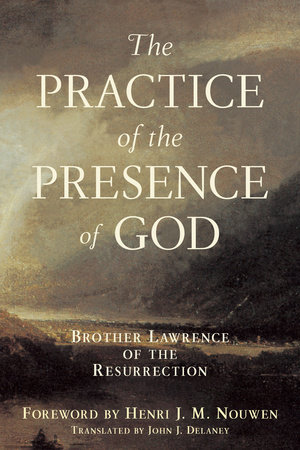
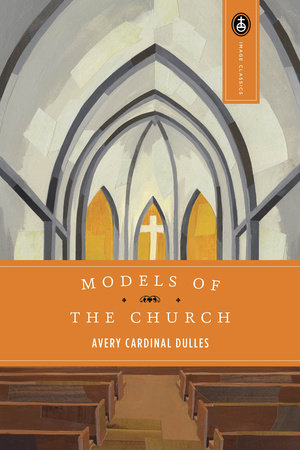
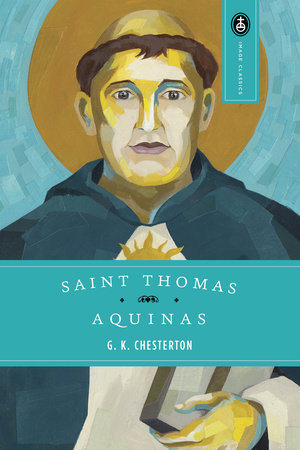
If you would like to learn more about the Carmelite Order or the Carmelite brothers and sisters mentioned above, we encourage you to check out the following books:


Come back next week for another look at the orders of the Church!


GIVEAWAY: Image Books is Celebrating MOM!
This Mother’s Day, let Image Books help you celebrate Mom! We’re giving away a Mother’s Day Gift Basket, complete with great books, chocolate, and a $25 pampering gift card, to one lucky mom! Enter by May 6th for a chance to win, and we’ll ship it to you in time for Mother’s Day. (We can even ship directly to Mom, if needed!)


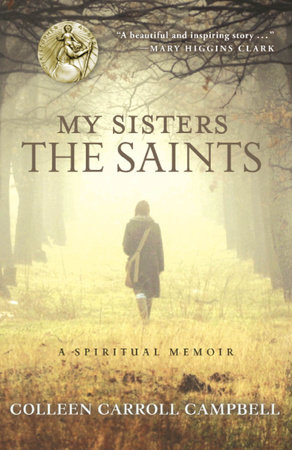
YEAR OF FAITH: A Reading from My Sisters the Saints by Colleen Carroll Campbell

Reading Teresa’s [Teresa de Cepeda y Ahumada, Teresa of Ávila] story helped me understand for the first time why my parents had returned to her works so oft en and spoken of her with such affection. In Teresa, I found a woman of passion and purpose whose journey was all the more compelling for its detours.

Teresa’s spicy, messy, and meandering spiritual journey cast my own struggles in a new light. Perhaps the discontent that had dogged me for the past year was not a spiritual dead end or a signal that I needed to work harder at tidying up my life. Maybe it was the opening chapter in a love story like the one Teresa had lived, a story in which a divine protagonist pursues his beloved with reckless ardor and ultimately wins her heart. Reading about Teresa’s ecstatic prayer experiences— in which she felt Jesus consuming her with a love so sweet and piercing that she thought she might die on the spot— I felt a desire for divine intimacy kindled within me.

I also felt inspired by the discovery that Teresa’s ardent faith had not squelched her natural boldness and originality but purified and intensified both, allowing her to use her gift s for a higher good. For Teresa, faith was a source of liberation, not oppression. She surely was a product of her times; her apologies for “womanly dullness of mind” make that clear. Yet Teresa defended a woman’s calling to the same heights of mystical prayer to which God calls men and praised women for the special love and faith they showed Jesus while he was on earth. In an early draft of The Way of Perfection, she laments that the all- male ranks of judges in her day see “no virtue in women that they do not hold suspect,” and she looks forward to the day “when everyone will be known for what he is . . . these are times in which it would be wrong to undervalue virtuous and strong souls, even though they are women.”

Slapping the feminist label on Teresa may be a stretch, but this trailblazer’s single- minded focus on God’s will led her to embark on adventures and undertake risks that would have intimidated most men of her day— and most secular feminists of ours. Through it all, Teresa retained her Spanish wit and zest for life, encouraging her nuns to join her for laughter, music, and dancing during recreation periods and delivering spiritual insights in an earthy, intuitive voice that reveals a uniquely feminine spiritual perspective.

Meeting Teresa marked a significant step in my nascent spiritual journey, though I did not understand its full significance until years later. Teresa was the first woman saint I discovered as an adult; she was the first to model a mixture of faith, femininity, and freedom that I could admire and appropriate for my own life. I had no plans to join the cloistered Carmelites and no illusions that my mumbled daily prayers would morph into ecstasies anytime soon. It did not cross my mind that I should forgo plunging necklines or an extra beer on my girls’ nights out, much less don a hair shirt or maintain monastic silence.

For all the differences between Teresa’s life and mine, though, I could see strong parallels: an aching hunger for meaning, boredom with worldly pleasures and success, a passionate and often prideful intensity that could be used for great good or great folly. In Teresa, I saw the kind of woman I might become if I ever took God seriously enough to try. And I found a friend to whom I could turn in prayer, someone who could give Jesus an extra nudge on my behalf when I needed help overcoming the temptations of superficiality and sensuality that Teresa knew well.

Excerpted from My Sisters the Saints by Colleen Carroll Campbell. Copyright © 2012 by Colleen Carroll Campbell. Excerpted by permission of Image, a division of Random House, Inc. All rights reserved. No part of this excerpt may be reproduced or reprinted without permission in writing from the publisher.


PRESS RELEASE: Pray for Me: The Life and Spiritual Vision of Pope Francis, First Pope from the Americas

From His Humble Beginnings to His Most Inspirational Teachings – Everything You Need to Know About the New Pope 

COLORADO SPRINGS, Colorado — On March 13, 2013, in Rome, Cardinal Jorge Mario Bergoglio of Buenos Aires, Argentina, was elected pope. As he stepped onto the balcony, and overlooked the crowd in St. Peter’s Square, he made a humble and unexpected gesture.  Before offering the traditional apostolic blessing, he greeted the faithful with a request, “Pray for me.”

This simple appeal set a beautiful precedent for his papacy and was the inspiration behind the title for a new book on his life Pray for Me:  The Life and Spiritual Vision of Pope Francis, First Pope From the Americas (Image Books, April 30, 2013) by Dr. Robert Moynihan, founder and editor of Inside the Vatican magazine.

In Pray for Me, Moynihan offers a three-part introduction to the life and teachings of Jorge Mario Bergoglio, who was chosen by the cardinals of the Roman Catholic Church to be the 266th successor of the Apostle Peter.

In Part One, Moynihan provides a firsthand account of the first two weeks of Pope Francis’ papacy, capturing the historical moments of those early days — his first Angelus, his first Wednesday audience, his inauguration Mass — as they happened.

Part Two is a brief biography, providing context for understanding Pope Francis’ origins: from his youth to his election as Pope at the age of seventy-six. This part offers insight into the spiritual influence behind actions taken during his years as a Jesuit priest and later as Archbishop of Buenos Aires.  

Part Three is titled “In His Own Words” and is a collection of Pope Francis’ thoughts on various theological and philosophical topics. Taken from homilies, interviews and public addresses, this section gives readers an insight into the spiritual vision of the new pontiff with a look at his most inspirational teachings on God, prayer, marriage and family, religious freedom, and more.

In the introduction, Moynihan writes that the central purpose of the book is to offer  “readers an opportunity to journey alongside this new pope, not only by walking with him in the first days of his papacy, but also by allowing readers to experience the soul of this man, his strength, passion, and tenderness.”

Speaking to the significance of the title, Moynihan writes “This book is intended to help those who are responding to the first request made by this pope to all of us, a simple request, from his heart: ‘Pray for me.’”

About Robert Moynihan

Dr. Robert Moynihan is founder and editor of Inside the Vatican magazine, a monthly journal on Church and world affairs from Rome. He is regarded as one of the world’s leading Vatican analysts and author of Let God’s Light Shine Forth: The Spiritual Vision of Pope Benedict XVI. He received his Ph.D. in medieval studies from Yale University and divides his time between Rome and Front Royal, Virginia. He has appeared on Fox News, CNN, ABC, EWTN and other worldwide networks and media outlets.


Media inquiries should contact Katie Moore, publicist, kamoore@randomhouse.com, 719-268-1936


Top