

Uncategorized

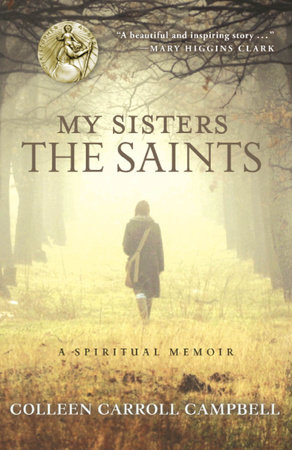
YEAR OF FAITH: A Reading from My Sisters the Saints by Colleen Carroll Campbell

Reading Teresa’s [Teresa de Cepeda y Ahumada, Teresa of Ávila] story helped me understand for the first time why my parents had returned to her works so oft en and spoken of her with such affection. In Teresa, I found a woman of passion and purpose whose journey was all the more compelling for its detours.

Teresa’s spicy, messy, and meandering spiritual journey cast my own struggles in a new light. Perhaps the discontent that had dogged me for the past year was not a spiritual dead end or a signal that I needed to work harder at tidying up my life. Maybe it was the opening chapter in a love story like the one Teresa had lived, a story in which a divine protagonist pursues his beloved with reckless ardor and ultimately wins her heart. Reading about Teresa’s ecstatic prayer experiences— in which she felt Jesus consuming her with a love so sweet and piercing that she thought she might die on the spot— I felt a desire for divine intimacy kindled within me.

I also felt inspired by the discovery that Teresa’s ardent faith had not squelched her natural boldness and originality but purified and intensified both, allowing her to use her gift s for a higher good. For Teresa, faith was a source of liberation, not oppression. She surely was a product of her times; her apologies for “womanly dullness of mind” make that clear. Yet Teresa defended a woman’s calling to the same heights of mystical prayer to which God calls men and praised women for the special love and faith they showed Jesus while he was on earth. In an early draft of The Way of Perfection, she laments that the all- male ranks of judges in her day see “no virtue in women that they do not hold suspect,” and she looks forward to the day “when everyone will be known for what he is . . . these are times in which it would be wrong to undervalue virtuous and strong souls, even though they are women.”

Slapping the feminist label on Teresa may be a stretch, but this trailblazer’s single- minded focus on God’s will led her to embark on adventures and undertake risks that would have intimidated most men of her day— and most secular feminists of ours. Through it all, Teresa retained her Spanish wit and zest for life, encouraging her nuns to join her for laughter, music, and dancing during recreation periods and delivering spiritual insights in an earthy, intuitive voice that reveals a uniquely feminine spiritual perspective.

Meeting Teresa marked a significant step in my nascent spiritual journey, though I did not understand its full significance until years later. Teresa was the first woman saint I discovered as an adult; she was the first to model a mixture of faith, femininity, and freedom that I could admire and appropriate for my own life. I had no plans to join the cloistered Carmelites and no illusions that my mumbled daily prayers would morph into ecstasies anytime soon. It did not cross my mind that I should forgo plunging necklines or an extra beer on my girls’ nights out, much less don a hair shirt or maintain monastic silence.

For all the differences between Teresa’s life and mine, though, I could see strong parallels: an aching hunger for meaning, boredom with worldly pleasures and success, a passionate and often prideful intensity that could be used for great good or great folly. In Teresa, I saw the kind of woman I might become if I ever took God seriously enough to try. And I found a friend to whom I could turn in prayer, someone who could give Jesus an extra nudge on my behalf when I needed help overcoming the temptations of superficiality and sensuality that Teresa knew well.

Excerpted from My Sisters the Saints by Colleen Carroll Campbell. Copyright © 2012 by Colleen Carroll Campbell. Excerpted by permission of Image, a division of Random House, Inc. All rights reserved. No part of this excerpt may be reproduced or reprinted without permission in writing from the publisher.


CHURCH 101 PART 6: Images of Mary

As we end our exploratory journey into the essential components of the church, we examine one final piece: images of St. Mary. These images have their own unique way of pervading the church’s sacred confines and reminding us of our ever-present Savior.

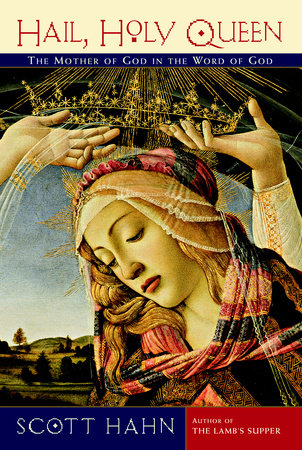
Because Mary gave birth to Jesus, she is venerated for all-time as the Blessed Virgin, the Mother to Christ, and to all. Mary is not only represented by solemn, welcoming statues, but many other symbols. Among these are the initial M, the fleur-de-lis, lily, rose (sometimes called the mystic rose), and even simply the color blue. All of these serve as reminders of Mary’s presence, and, thus, the presence of Jesus.

We hope you’ve enjoyed our exploration of the church and hold a new appreciation for your place of worship. For more information on the architectural church, and the importance these features have in the spiritual Church, check out The Church: Unlocking the Secrets to the Places Catholics Call Home by Donald Cardinal Wuerl and Mike Aquilina today! The Church is available wherever books and ebooks are sold.


Top