

VIDEO: Pray For Me by Robert Moynihan – Book Trailer

From the founder and editor of Inside the Vatican magazine, the world’s most well-informed, comprehensive monthly on the Roman Catholic Church, comes this enlightening introduction to the life and spiritual teachings of Jorge Mario Bergoglio, now Pope Francis, the first Pope of the Americas.


Religious Orders of the Catholic Church: Augustinians

The name “Augustinians” can refer to several, mostly unrelated orders. The two most significant are the Augustinian Canons, an order of clerics within the Catholic Church, and the Order of Augustine, which refers to a sect of friars devoted to the rule of Saint Augustine.

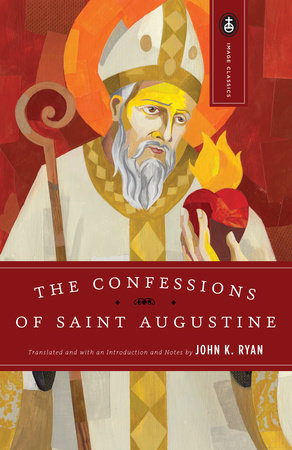
Saint Augustine (354—430) was born in Hippo-Regius (what is now known as Annaba, Algeria), a Roman province in Africa. Many lay Catholics also know of the early years of his life spent away from the church as told in his Confessions, when he famously said “Lord make me chaste—but not yet.” His mother, Saint Monica, waited patiently for him to come to faith. When he did, he became the bishop of Hippo as well as the founder of the Augustinian orders. What most don’t know, however, are the subtle differences between the orders St. Augustine originally founded.

The friars of the Order of Augustine were not always united under a single rule. Instead, city-dwelling as well as secluded monasteries adopted the rule of Augustine, all applying it differently to their daily lives. These differences, however, soon became points of contention, and to ease the resulting quarrels, Pope Alexander IV issued a papal bull that required the monasteries to join together under a single, agreed-upon rule. In 1256 AD, a union was solidified. As a mendicant order, the Augustinians do not own individual property, and—like any order of friars—they pray the liturgy of the hours daily. The Augustinians are distinguished from other orders by three distinctive characteristics: they can move to and from different communities, they engage in apostolic activities, which is why their order has been largely responsible for spreading the Catholic faith, and they are committed to communal, not merely individual, poverty.

Among the many branches of Augustinians—including the secular fraternities and Sisters of Saint Rita—the Descalced Augustinians are worth mentioning. This particular branch evolved as a reform movement in 16th century Italy. Sworn to even stricter practices of poverty and asceticism, the Descalced or “Barefoot” Augustinians (named for the sandals they wear, rather than shoes) observe complete silence and retire to an even stricter rule that involves a limited diet of bread, oil, fruits and vegetables, and wine.

While Augustinian nuns are also prevalent (like the Sisters of Saint Rita), they are not unified in the practices of their daily lives. They, like the ancient predecessors of the original Augustinian friars, adhere to Augustine’s original rule for nuns. Because they were (presumably) uninvolved in the quarrels of the middle ages, they were not included in Pope Alexander IV’s order for unification.

Despite the commitment of the Augustinian Order, its monasteries are not nearly as widespread today as they once were. While the order has helped extend the reach of the Roman Catholic Church, hundreds of influential monasteries were lost to events like the French Revolution and the Philippines’ military conflict in 1896. Today, only about a tenth of Augustinian monasteries exist compared to the height of their influence. However, the remaining orders continue their work in good faith.

Among the many Augustinian saints are Saint Rita of Cascia, the patron saint of lost and impossible causes, and Saint Nicholas of Tolentino, patron of animals, babies, boatmen, and the Philippines.

If you’d like to learn more about the life and faith of Saint Augustine, check out the following available here at Image Catholic Books:

We hope you’ve enjoyed learning about the Church’s many distinct Orders. Next time you see a black habit or a friar wearing sandals, hopefully you’ll know to which order he belongs! Thanks for reading the Orders of the Church.


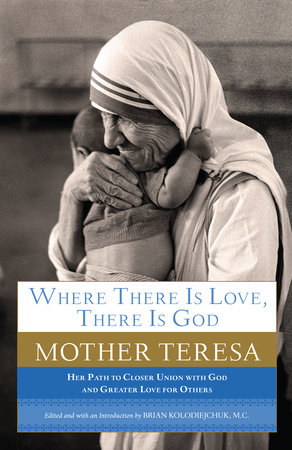
YEAR OF FAITH: A Reading from Where There is Love, There is God by Mother Teresa

We have the most beautiful way of coming close to Jesus, if only we have a clean heart, a humble heart. For this Jesus said “Learn from me for I am meek and humble of heart.”  Not from books, not from people, but from Him. He said it in all sincerity. For our Society humility is the most necessary virtue. The work given to us is something holy, something real. To do His work we need humility. Our Lord has entrusted to us the most beautiful work. One priest wrote, “I want to satiate His thirst.” He said he is suffering, longing to satiate the thirst of Jesus. “I thirst” is continually in his mind, heart, body. But we have this in our Society, this work, a vow, a vow with God, not a devotion, a vow with God, like poverty and obedience. We need a clean and humble heart. “Learn from me!” Jesus said, directly from Him. He did not tell us to take trouble to do this or that.

Excerpted from  Where There is Love, There is God  by Mother Teresa p. 140. Copyright © 2010 by The Mother Teresa Center, exclusive licensee throughout the world of the Missionaries of Charity for the works of Mother Teresa. Excerpted by permission of Image Books, a division of Random House, Inc. All rights reserved. No part of this excerpt may be reproduced or reprinted without permission in writing from the publisher.


Religious Orders of the Catholic Church: Dominicans

The Order of Preachers

The Dominican Order dates back to the early 13th Century when St. Dominic of Osma (what is now Spain) started his own monastic order adapted from the Rule of Benedict, under which he was serving. Dominic set off to Rome to get permission for his new Rule and received it from Pope Honorius III in 1220. At that time, two main chapters of the Dominican Order came into place, following the lead of their founder. The Dominicans are called the “Order of Preachers,” because their purpose is to preach and teach. Their motto reads Laudare, Benedicere, Praedicare—to praise, to bless, to preach.

There are three Dominican Orders. The first is the Order of the Friars preacher, which consists of males only. The friars take vows of obedience, chastity, and poverty. In addition, they follow ascetic monastic observances which require wool clothing, hard bedding, fasting from September to Easter, and other such sacrifices. The uniform of the Friars is a white tunic and black cloak. The Second Order consists of the Dominican Sisters, who follow a very similar rule to that of their male counterparts, except that they live a cloistered life and perform manual labor. In addition, the sisters recite the canonical hours, or Divine Office. The Third Order Sisters take simpler vows and usually live active lives outside of a monastery.

As aforementioned, the main priority of the Dominican Order is teaching, and so they have ties to many academic and intellectual pursuits, including the application of Christian principles to the work of Aristotle. They are known as the “Watchdogs of orthodoxy” or “Hounds of the Lord,” which not only refers to their zeal in the realms of orthodoxy and education, but plays off a Latin pun on the name “Dominicans” (domini, of the Lord, canes, dogs).

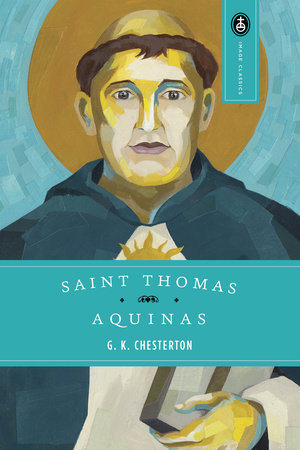
Over the centuries, many have chosen to dedicate their lives to God under the Rule of St. Dominic. Among these is St. Rose of Lima, Peru (1586—1617), joined the Third Order and subsequently became the first beatified American. St. Catherine of Sienna, a 14th Century saint, was also part of the Third Order Dominicans. St. Thomas Aquinas, author of the Summa Theologica, was actually forbidden from joining the Order by his mother, who then held him captive in his own home for two years before allowing him to return to his work with the Order of Preachers.

For further reading on the Dominican Order, check out the following:


Come back next week for our final look at Catholic Orders!


Top